“When should I place an order?” The answer is the reorder point: the line that signals “order when stock drops to here.” Here is a plain-language guide to its meaning, how to think about the calculation, and the ordering methods.
What is the reorder point?
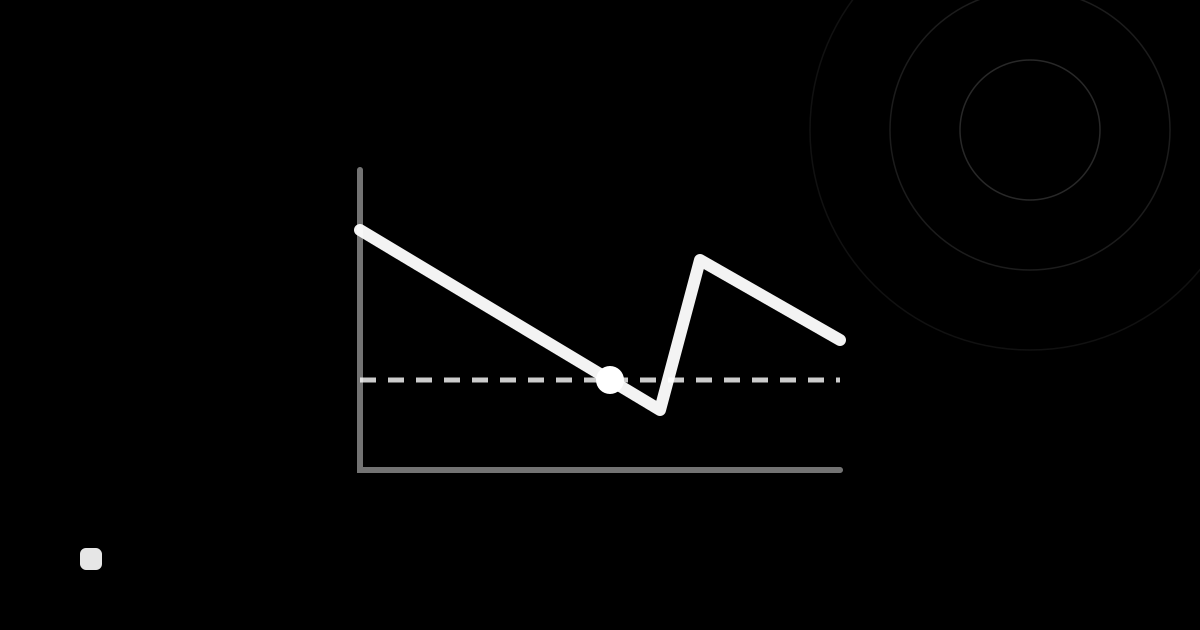
The reorder point is the stock level you set as the “signal to order”—when stock falls to this number, you place an order. It is the basis of the reorder-point method (fixed-quantity ordering).
There is a delay between placing an order and the goods arriving (the procurement lead time). If you wait until stock hits zero before ordering, you run out while you wait for delivery. The reorder point is the line that lets you order while you still have enough to cover demand until the goods arrive.
The reorder point formula
A common formula is as follows.
Reorder point = expected demand during the procurement lead time + safety stock
- Expected demand during the lead time: how much you expect to sell (or use) between placing an order and receiving it. Calculate it as “demand per day × number of lead-time days.”
- Safety stock: buffer stock that guards against variability in demand and delays in delivery. → What is safety stock
For example, if you sell 10 units a day, the lead time is 5 days, and safety stock is 20 units, the reorder point is “10 × 5 + 20 = 70 units.” You order when stock drops to 70.
Difference from safety stock
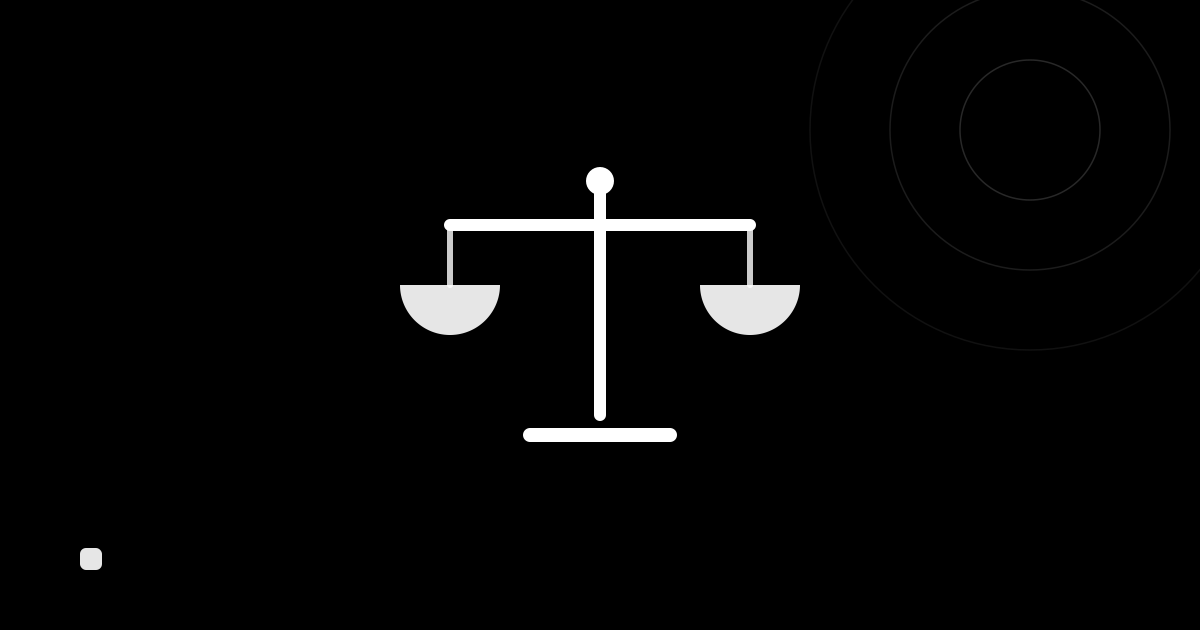
The reorder point and safety stock are easily confused, but they play different roles.
| Term | Role |
|---|---|
| Safety stock | The “lower buffer” you hold against stockouts (a quantity) |
| Reorder point | The “signal” to order when stock drops to here (a timing) |
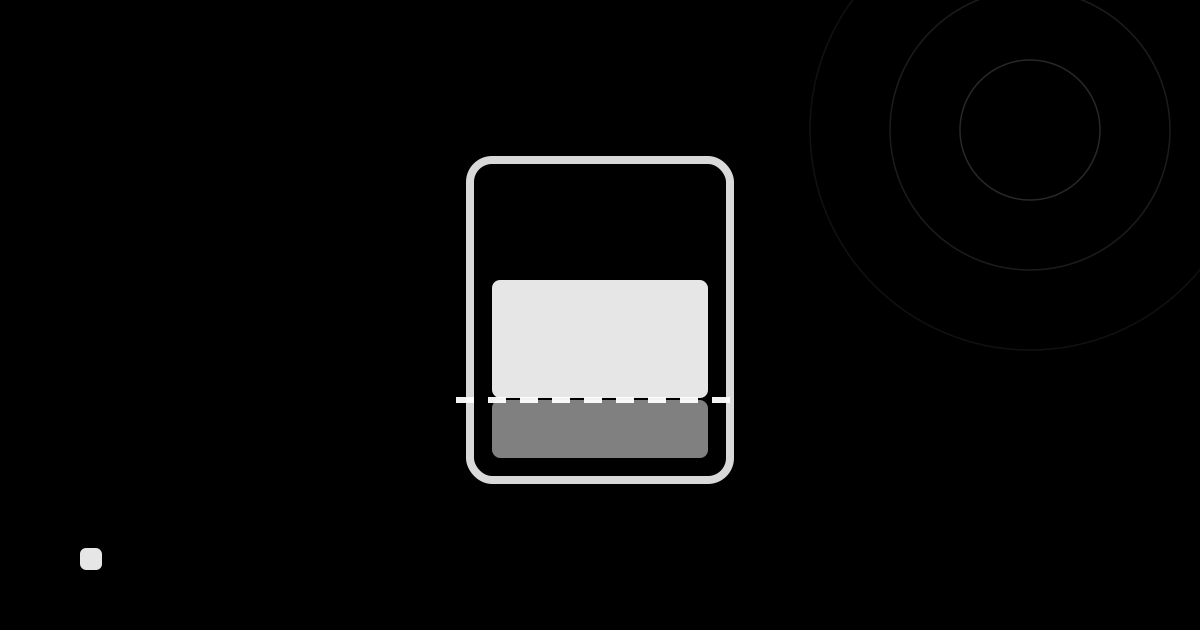
The reorder point is a level that includes safety stock. The idea is that after stock falls below the reorder point and until the next delivery, the safety stock portion carries you through.
Ordering methods (fixed-quantity vs. fixed-interval)
There are two broad ways to order.
| Method | What it is | Suited to |
|---|---|---|
| Fixed-quantity ordering | When stock falls below the reorder point, order a fixed amount | Products with stable demand whose reorder point is easy to manage |
| Fixed-interval ordering | On a fixed cycle, order whatever amount is needed each time | Products with large demand swings or high importance |
The reorder point is mainly used in fixed-quantity ordering. Use fixed-interval ordering for slow movers or important products to keep management manageable. → What is ABC analysis
The reorder point in an inventory management system
The cloud inventory management system “KuraPro” has no dedicated reorder-point field, but you can use the minimum stock level you set per product as your reorder point. When stock falls below the minimum level, it appears as “low stock” in stock alerts, so you can notice and order the moment you cross the reorder point.
If you set the minimum level to a reorder point of demand during the lead time plus safety stock, you never miss the timing to replenish. For how to set it, see Stock alerts and Managing products in the user guide. → What is appropriate inventory
Summary
- The reorder point is the stock level that signals “order when stock drops to here.”
- The basic calculation is “expected demand during the lead time + safety stock.”
- Safety stock is a “buffer quantity”; the reorder point is the “timing to order”—different roles.
- An inventory system’s minimum levels and alerts let you systematize ordering the moment you cross the reorder point.
With KuraPro, set the minimum level as your reorder point and get an alert automatically when stock drops below it. Try it now on the free plan.