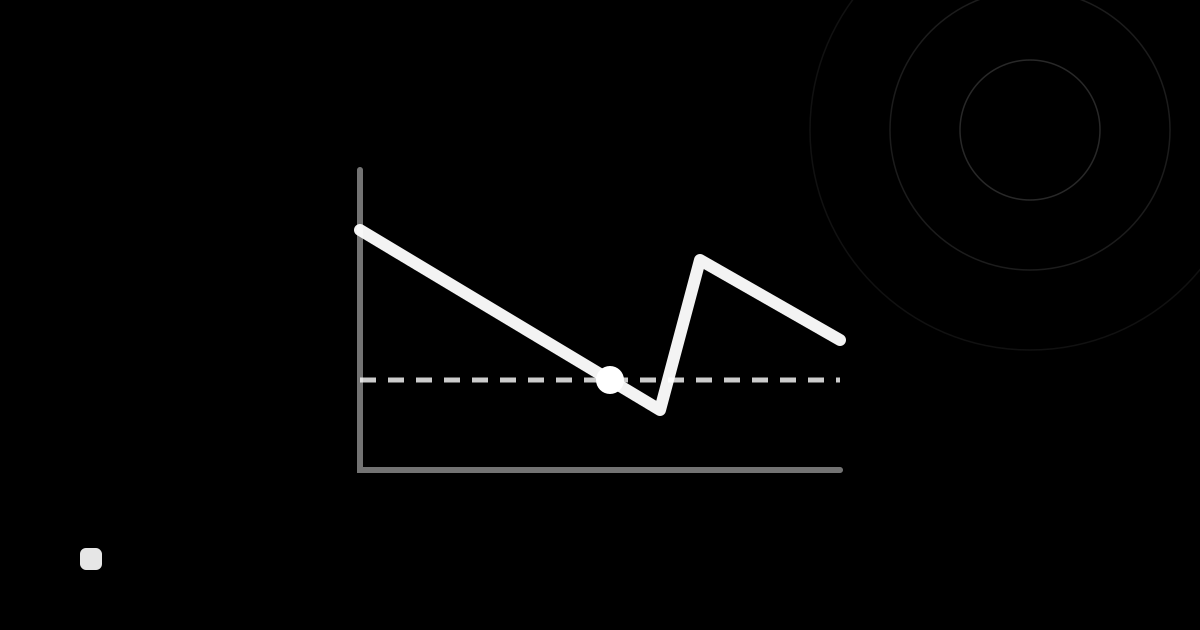
“It suddenly sold faster than usual.” “The delivery was late.” The stock you hold so you don’t run out even in these unexpected moments is safety stock. Here is a plain-language guide to its meaning, how to think about the calculation, and how it differs from the reorder point.
What is safety stock?
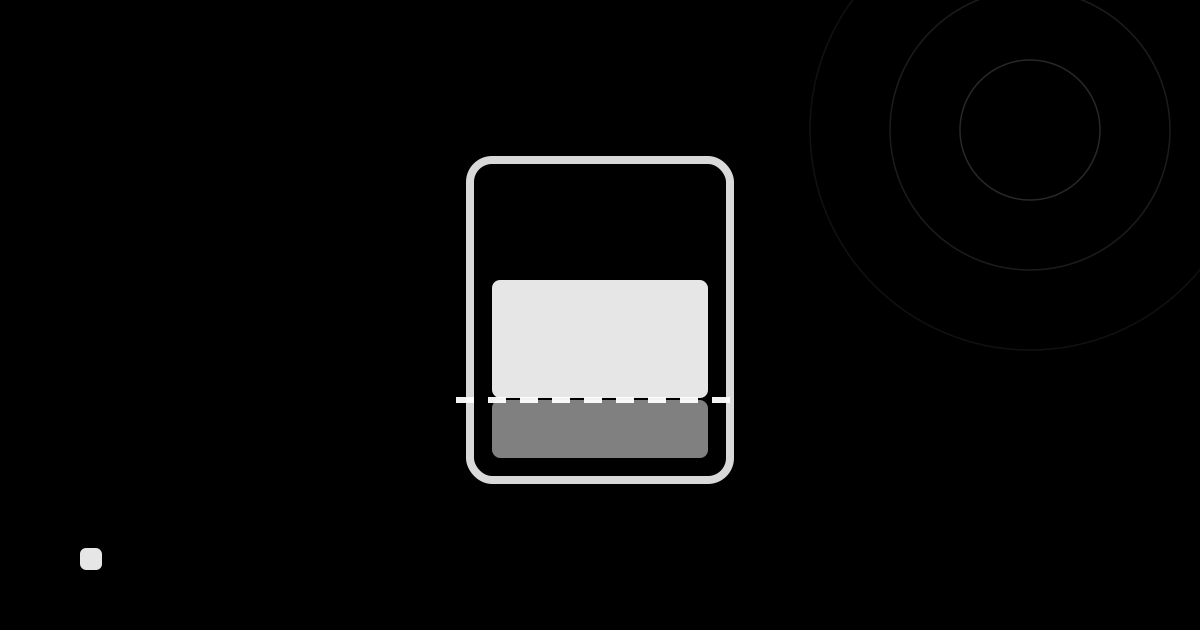
Safety stock is the minimum buffer stock you hold to guard against variability in demand and delays in supply.
If you hold only the theoretically exact amount, even a small rise in demand or a late delivery causes a stockout. Safety stock is the buffer that absorbs that “wobble.”
The safety stock formula
A common formula is as follows.
Safety stock = safety factor × variability of demand (standard deviation) × √(procurement lead time)
- Safety factor: a coefficient tied to how much you refuse to allow stockouts (service level). The more you want to avoid stockouts, the larger it is.
- Variability of demand: how much demand fluctuates. The more it varies, the more safety stock you need.
- Procurement lead time: the time from placing an order to receiving it. The longer it is, the more safety stock you need.
If a strict calculation is hard, you can start from a simple guide such as “past peak demand − average demand” and adjust as you operate.
Difference from the reorder point
Used together with safety stock is the reorder point (the stock level at which you place an order).
Reorder point = expected demand during the lead time + safety stock
- Safety stock = the “lower buffer” against stockouts.
- Reorder point = the “signal” that says order when stock drops to here.
A rule of “order when stock falls below the reorder point” means you never miss the timing to replenish. → What is the reorder point / What is appropriate inventory
The downsides of too much or too little
| If safety stock is… | Downside |
|---|---|
| Too high | More storage cost, tied-up cash, waste (excess stock) |
| Too low | Stockouts, lost sales, lower customer satisfaction |
The right level differs by product, so the basic approach is to set it generously for best sellers (important items) and modestly for slow movers. → What is ABC analysis
Safety stock in an inventory management system
In the cloud inventory management system “KuraPro,” you can set a minimum stock level per product, and when stock falls below it, it appears as “low stock” in stock alerts. By setting your safety stock as the minimum level, you can notice and reorder before running out.
For how to set it, see Stock alerts and Managing products in the user guide.
Summary
- Safety stock is buffer stock against wobble in demand and supply.
- The basic calculation is “safety factor × demand variability × √lead time”; you can start from a simple guide.
- The reorder point is “demand during lead time + safety stock.”
- An inventory system’s minimum levels and alerts let you systematize reordering before stockouts.
With KuraPro, set a minimum level and get low-stock alerts automatically. Try it now on the free plan.