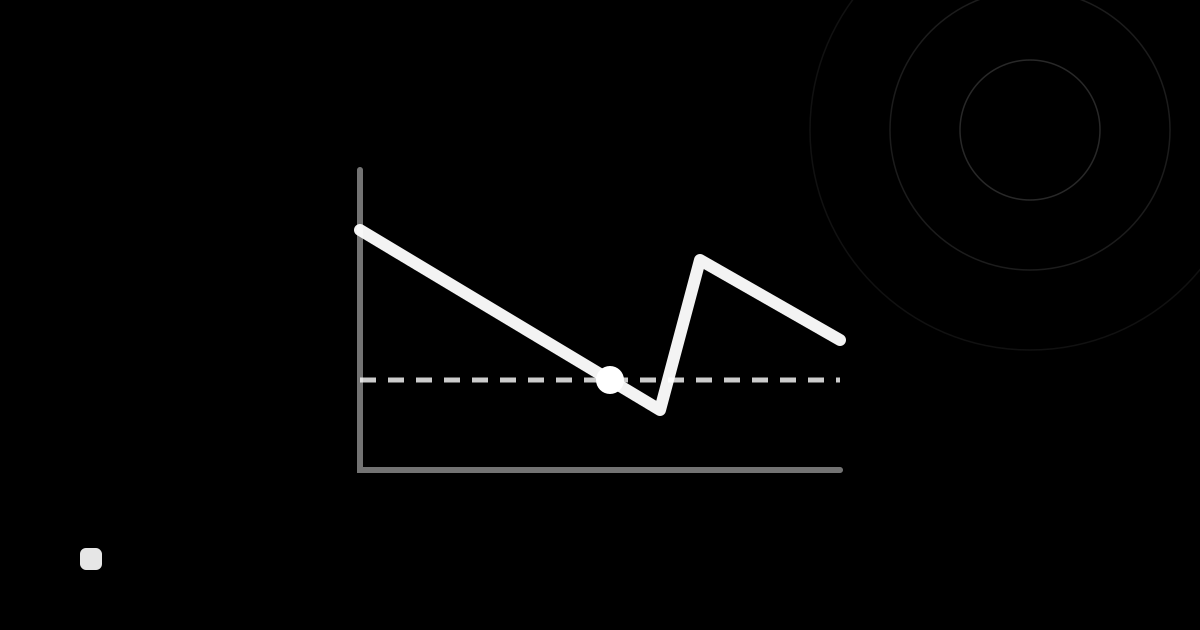
Too much inventory is a problem; so is too little. Preventing stockouts while curbing the waste of holding too much — that just-right level is appropriate inventory. Here is a plain-language guide to the idea and the points for keeping it.
What is appropriate inventory?
Appropriate inventory is the “just-right amount of stock” that prevents stockouts while not becoming excessive.
It isn’t true that “less stock is always better” or that “more is safer.” Appropriate inventory is the level that balances the risk of stockouts against the cost of holding stock.
The downsides of excess and shortage
| State | Main downsides |
|---|---|
| Excess (too much) | Higher storage cost, tied-up cash, waste, pressure on space |
| Shortage (too little) | Stockouts, lost sales, customer churn, rush-order costs |
Both squeeze profit. Appropriate inventory is the target level for avoiding both.
How to find appropriate inventory
It’s practical to set it as a “min–max” range by combining a few ideas.
- Lower bound (safety stock, reorder point): the minimum line to avoid stockouts, set from demand variability and lead time. → What is safety stock / What is the reorder point
- Upper bound: the ceiling to avoid holding too much, set from storage capacity, cash and turnover. → What is inventory turnover
- Vary it by product: be generous with important best sellers, trim low-contribution items. → What is ABC analysis
Points for maintaining appropriate inventory
- Make the numbers visible: keep current stock and outbound records viewable anytime.
- Operate with set min/max: order when below the minimum, review when above the maximum.
- Stocktake regularly: correct the gap between the books and actual stock. → What is stocktaking
- Make review a habit: demand changes, so update the set values periodically.
Managing appropriate inventory in an inventory system
In the cloud inventory management system “KuraPro,” you can set a minimum and maximum stock level per product, and when stock leaves the range, stock alerts (low stock / excess stock) notify you. You can set just the minimum, just the maximum, or both.
You can also grasp best sellers and stagnant items with by-product reports and ABC analysis to inform your settings. For details, see Stock alerts in the user guide.
Summary
- Appropriate inventory is the just-right amount that prevents stockouts without being excessive.
- Both excess and shortage squeeze profit; managing within a lower (safety stock) to upper range is practical.
- Vary it by product, and maintain it with stocktaking and review.
- An inventory system’s min/max levels and alerts make the right level easier to hold.
With KuraPro, set minimum and maximum levels to be alerted to shortage and excess automatically. Try it now on the free plan.